
Response, Recovery, Resilience – how dryland communities manage climate shocks
Drylands under pressure
Many of the most pressing adaptation challenges facing Africa are concentrated in the drylands.
They cover two-thirds of Africa, are home to half a billion people, are warming at up to twice the global average; yet they contain enormous natural and human assets.
Climate variability and change will increase the negative effects of natural and environmental hazards, risks and shocks on the lives, livelihoods and food security of communities in these drylands.
Focusing on the first responders to any shock – in local communities – is an essential part of food security early action in Africa’s drylands.
Time for early action
Governments, development agencies and communities must invest in ‘anticipatory actions’ to better prepare, adapt and respond to climate shocks at the intersection of agri-food systems, climate action, governance and humanitarian action.
- Draw on the assets and knowledge of local and indigenous pastoralist communities and their networks;
- Invest early to counter risks to land, livestock and livelihoods;
- Use predictive evidence and data on risks and impacts to guide decisions;
- Design for long-term resilience as well as for shorter-term response and recovery outcomes; and
- Build transformative anticipatory and adaptive capacities of communities and others to manage climate shocks.
Inspired by communities
Communities in the drylands of East Africa have dealt with shifting horizons of droughts and natural disasters for generations. Over time, these pastoralist communities have built strong networks and collective action, flexing their livelihoods, proactively reacting to risks and opportunities while stewarding landscapes and biodiversity and producing livestock and other products for urban markets.
Their first-hand knowledge should be placed at the centre of climate adaptation and risk mitigation interventions.
As Africa looks ahead to manage future droughts and other climate shocks, here are some strategies, actions and solutions used by dryland communities as they practice the three R’s – Response, Recovery, Resilience – in the face of climate variability and unpredictability.
The key messages and images below were distilled from our interactions with community elders and others living and working in drylands; the posters were shared in a September 2023 Africa Climate Week session in Nairobi – read a report
RESPONSE
Communities respond to anticipated or immediate shocks by acting early on forecasts, de-stocking their herds, tracking market prices, buying essentials and tapping trusted relationships.
Communities act on official forecasts, advice and other information from government and humanitarian agencies. Image: KBC (https://www.youtube.com/watch?v=7rUCck9I_fA)

Communities consult indigenous forecasters on expected rainfall and drought, combining their results with official seasonal predictions. Image: Gue et al (https://doi.org/10.1186/s13570-022-00258-0) https://doi.org/10.1186/s13570-022-00258-0
 Communities sell animals before disasters hit and prices slump, reducing pressure on feed and land and providing cash for household essentials. Photo: Peter Ballantyne
 Communities respond to immediate shocks and competition for resources by resolving differences and managing access. Photo: Julie Ojango
 Communities respond to shocks by moving themselves and their animals to better locations and grazing areas. Photo: Oxford Environmental Change Institute

Communities split their herds and move animals to better locations involving networks of trust and regulated by traditional reciprocal resource governance mechanisms. Photo: Tahira Mohamed
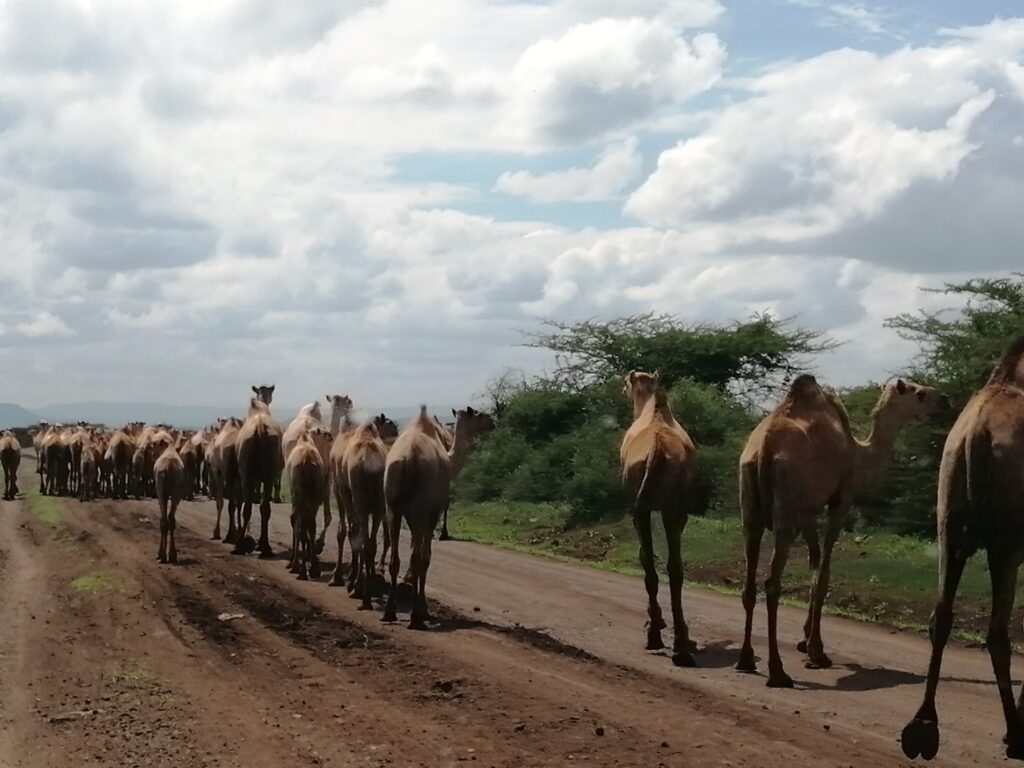 Community responses to immediate shocks benefit from cash payments that put drought management decision making in their hands. Photo: IRC disburses cash in Ethiopia/Fred Harter

RECOVERY
As a shock or emergency is brought under control or passes, communities take actions that help to bring their lives and and livelihoods closer to ‘normal’ – which often comprises continuing responses as well as steps to prepare for future changes.
Communities recover from shocks by replacing lost animals with drought or heat tolerant breeds such as these cattle. Photo: Julie Ojango

Communities recover by drawing on insurance schemes and familial networks to re-stock animals and other assets. Photo: Riccardo Gangale

Communities use customary social protection systems like ‘dabare’ or ‘buusaa-gonofaa’ to help family and friends recover and rebuild their livelihoods. Photo Samuel Derbyshire

Communities recover by monitoring and getting treatment for animals likely to be weakened by disasters. Photo: Tahira Mohamed

RESILIENCE
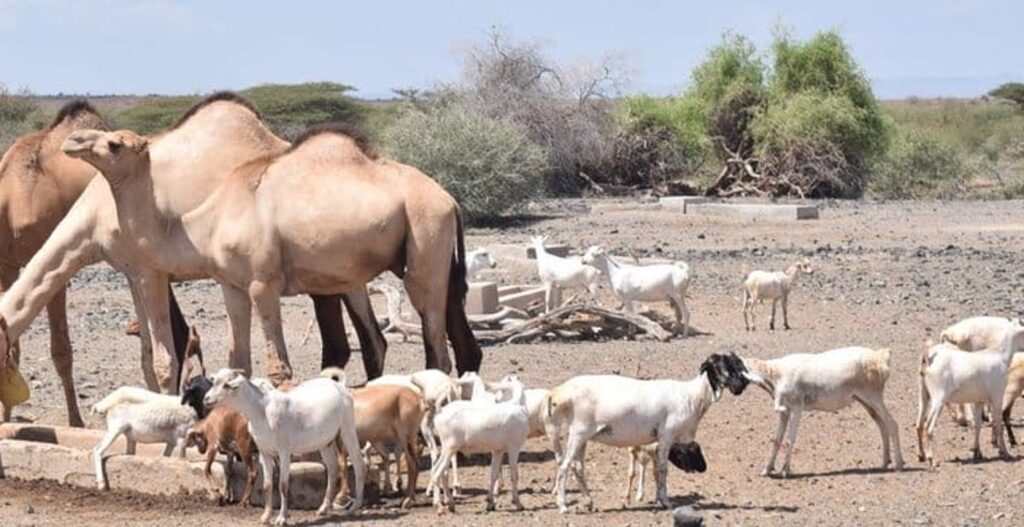
Communities prepare to resist and overcome future shocks by boosting their adaptive capacities to better mitigate, adapt to and bounce back from shocks and stresses in ways that reduce chronic vulnerability and facilitate inclusive growth.Communities build resilience against future shocks by changing the mix of animals they keep, choosing more risk-tolerant species such as goats or camels [Photo: Drylands Learning and Capacity Building Initiative]
 Communities build resilience by developing new business opportunities, such as fishing, or fruit and vegetable farming. Photo: Samuel Derbyshire.
 Communities build resilience through strong associations and structures for collective land and grazing management, fodder reserves, migration routes, and access to water. Image: Flaticon.com
 Communities build resilience by forming associations and networks that have voice and influence. Photo: Samuel Derbyshire
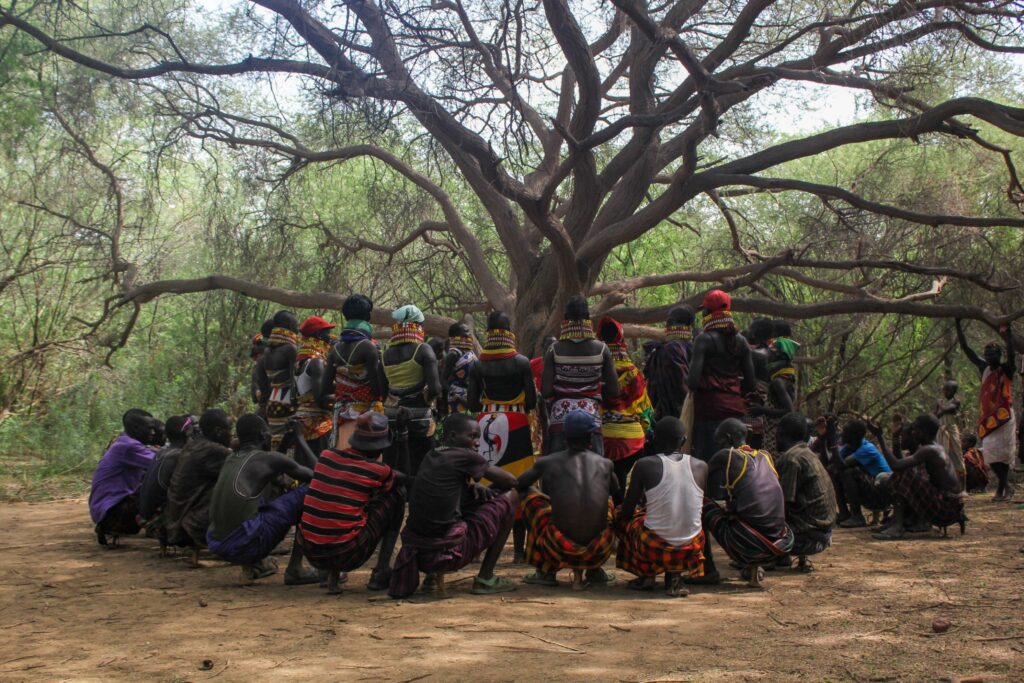 Communities build resilience by stewarding water and other resources through strong customary structures that manage multiple demands and shocks. Photo: Tahira Mohamed
 Communities build resilience through strong networks and structures, managing access to shared resources like water. Photo: Tahira Mohamed
 Communities build resilience through strong networks and structures, establishing and managing grazing or fodder reserves. Photo: Peter Prokosch
 Communities build resilience through participatory community-wide risk management and reduction plans and vulnerability assessments. Photo: Samuel Derbyshire

Communities build resilience and adaptive capacities through Participatory Scenario Planning that combines meteorological and traditional seasonal forecasts to inform local decisions. Photo: CARE International

Communities build resilience through participatory rangeland management efforts in which owners and users of pastoral rangelands negotiate and implement use of resources. Photo: Roba and Davies

Communities build resilience through community-centred ‘early warning early action’ projects that empower local people to anticipate, respond to, absorb, recover from and mitigate shocks. Image: Ben Mountfield

Communities contribute their local knowledge in early warning systems, shaping anticipatory actions so they are locally relevant and triggered at the right time and place. Image: Flaticon.com
